

The ongoing conflict between the United States and Iran has cost Washington an estimated $25 billion so far, a senior Pentagon official disclosed on Wednesday, offering the first official figure for the war’s financial toll. In fact, the US–Iran War Costs Hit $25bn as Conflict Strains government finances and public opinion. The scale of US–Iran War Costs Hit $25bn as Conflict Strains national priorities is a growing concern.
According to Jules Hurst, who is performing the duties of comptroller, the bulk of the spending has gone toward munitions. He provided the estimate during testimony before the House Armed Services Committee, though he did not clarify whether the figure includes long-term costs such as rebuilding damaged military infrastructure in the Middle East, further emphasizing why US–Iran War Costs Hit $25bn as Conflict Strains budgets far beyond immediate needs.
The disclosure drew a sharp response from Adam Smith, the committee’s top Democrat, who noted lawmakers had long sought clarity on the war’s cost. The $25 billion figure is roughly equivalent to the annual budget of NASA.
However, questions remain over how the estimate was calculated. A prior projection from the administration of Donald Trump suggested that the first six days of the war alone cost at least $11.3 billion. This raises more discussion about how US–Iran War Costs Hit $25bn as Conflict Strains official resources and transparency.
Defending the spending, US Defense Secretary Pete Hegseth argued that the financial burden is justified by the strategic objective of preventing Iran from acquiring nuclear weapons. He also dismissed criticism from Democratic lawmakers, rejecting characterisations of the conflict as a “quagmire.”
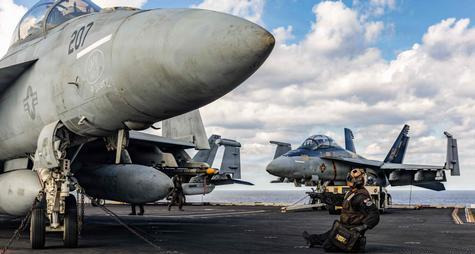
The war began on February 28, when the United States launched strikes against Iran. Although both sides are currently observing a fragile ceasefire, tensions remain high, with thousands of additional US troops deployed across the region and three aircraft carriers stationed in the Middle East. Thirteen US service members have been killed, with hundreds more wounded.
Beyond the battlefield, the conflict is having significant economic and political repercussions. Disruptions to global oil and gas supplies have driven up fuel prices, with US gasoline reaching its highest level in nearly four years, according to the American Automobile Association. The surge has also affected agricultural inputs such as fertilisers, adding to inflationary pressures. Notably, US–Iran War Costs Hit $25bn as Conflict Strains US and global economies further.
Global markets have reacted sharply, with oil prices rising to multi-year highs amid fears the conflict could drag on longer than expected. Analysts say traders are increasingly pricing in a prolonged crisis rather than a short-term escalation.
Public support for the war has also declined. Recent polling indicates that approval for the conflict among Americans has dropped significantly, adding political pressure ahead of key elections that will determine control of Congress.
Despite diplomatic signals, including proposals from Tehran to reopen the strategically vital Strait of Hormuz, Washington remains sceptical about Iran’s intentions, raising the possibility of further military action.