


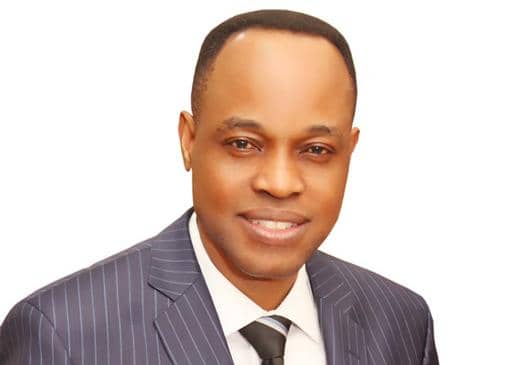
By Odesola JF., PhD
There are some things a nation should handle with great care. One of them is history – especially painful history.
Nigeria has lived through too many moments when religious suspicion turned neighbours against neighbours. Families have lost loved ones. Communities have been displaced. Places of worship have been attacked. And in many cases, ordinary people who simply wanted to live their lives peacefully became victims of conflicts they never started.
That is why the recent allegation linking Christians to the Maitatsine movement is deeply troubling.
Sheikh Yahya Jingir reportedly made the statement while speaking at a political gathering in support of Kano State Governor Abba Kabir Yusuf, tagged “Abba Go Again.” The governor was reportedly present.
There is nothing wrong with encouraging citizens to register to vote, obtain their voters’ cards and participate actively in democracy. Muslims have every right to mobilise politically, support candidates and determine the direction they want their communities and country to take.
Christians have the same right.
The problem begins when political mobilisation starts painting another religious community as an enemy—and especially when it does so by making claims about a painful chapter of our national history.
We Must Be Careful With History
History is not something we should rewrite simply because the facts make us uncomfortable. It is not a political weapon, and it should never be twisted to serve a present-day agenda.
The Maitatsine movement is one part of Nigeria’s history that demands particular care and honesty.
The movement emerged in northern Nigeria around the radical preacher Mohammed Marwa, popularly known as Maitatsine. It became associated with violent religious disturbances, particularly in the 1980s, including the devastating Kano crisis of 1980. These were not just events recorded in old newspapers or history books. They involved real people, real families and real communities.
People died.
Families lost fathers, mothers, sons and daughters.
Communities were devastated, and many Nigerians carried the scars of those conflicts long after the violence had ended.
That is why claims about the true identity or religious character of the Maitatsine movement should never be made casually, especially when such claims contradict the established historical record.
To describe the Maitatsine movement—which presented itself as a movement fighting in the name of Islam—as “so-called Christians in disguise” is a grave allegation. Without credible historical evidence, such a claim is not merely controversial; it risks becoming misinformation and a distortion of history.
One would expect anyone speaking from a position of influence and authority to handle such a sensitive subject with the greatest possible responsibility. Nigerians deserve truth, not narratives shaped by political convenience.
If someone believes that the accepted historical account of Maitatsine is wrong, there is nothing wrong with challenging it. But such a challenge should come with evidence—documents, credible historical records, eyewitness accounts and verifiable facts—not simply assertions made on a political platform.
We must also remember that history is not only about the people who made it. It is about the people who suffered it.
When we casually rewrite the past, we can reopen old wounds, deepen religious suspicion and create new divisions among people who are already living with the consequences of Nigeria’s troubled history.
Nigeria has enough challenges without turning our history into another battlefield.
We may disagree politically. We may belong to different religious communities. We may interpret events differently. But there must be some facts we are willing to protect together.
History must be confronted with truth, examined with evidence and discussed with responsibility.
Because when history is deliberately distorted, the damage does not remain in the past.
It can become a problem for the present—and a danger to the future.
Imagine If We Applied the Same Standard Everywhere
Sometimes the simplest way to understand the danger of collective blame is to turn the argument around.
Suppose a Christian commits a terrible crime. Would it be fair to say that Christianity produced the crime?
Of course not.
Suppose a Muslim commits a crime. Would it be fair to say that every Muslim in Nigeria is responsible?
Again, no.
We instinctively understand this when the accusation is directed at our own community.
So why should the principle be different when the accusation is directed at another faith?
A person who commits a crime is responsible for that crime. A group that organises violence is responsible for its actions. But millions of innocent people should not be made to carry the burden of something they neither supported nor participated in simply because they share a religious identity with the accused.
That is basic justice.
Christians Should Reject the Allegation—But Not Muslims
Christian Nigerians are justified in rejecting an allegation that falsely implicates them in the Maitatsine movement.
But our response must also be measured.
We must not make the mistake of answering one sweeping accusation with another.
If someone falsely accuses Christians, Christians should not respond by accusing all Muslims.
That would only create another wound.
We can say, clearly and firmly:
“That allegation is historically unsupported, and we reject it.”
But we can say it without hatred.
We can defend truth without creating enemies.
We can challenge misinformation without attacking an entire religion.
That is the kind of response Nigeria needs.
Words Matter More Than We Sometimes Realise
A statement made at a political rally may last only a few minutes.
But words do not always disappear when the microphone is switched off.
Today, a speech can be recorded on a phone, posted online and shared thousands of times before the speaker has even left the venue.
Someone who has never studied the history of the Maitatsine movement may hear such a claim and accept it as fact.
A young Christian may hear it and feel that his faith has been unfairly demonised.
A young Muslim may hear it repeatedly and begin to believe that Christians are secretly responsible for violence carried out by others.
And slowly, suspicion replaces trust.
A Christian neighbour begins to look suspiciously at a Muslim neighbour.
A Muslim business owner begins to wonder whether the Christian next door secretly hates him.
A student begins to judge a classmate because of his religion.
This is how division grows.
Not necessarily in one dramatic moment, but through repeated stories that teach people to fear one another.
Nigeria Already Has Enough Problems
We don’t need to invent new enemies.
Nigeria is already struggling with insecurity, kidnapping, terrorism, poverty, unemployment, corruption, inflation and the erosion of public trust.
Millions of Nigerians are simply trying to survive.
The mother struggling to feed her children does not wake up asking whether her neighbour is Christian or Muslim.
The young graduate looking for work does not care what religion the person standing beside him at the interview belongs to.
The farmer whose crops have failed is concerned about food.
The victim of kidnapping wants security.
The patient in a hospital wants treatment.
The unemployed young Nigerian wants opportunity.
These are the issues that should dominate our national conversation.
Nigeria needs leaders who can bring people together to solve these problems—not leaders or influencers who make citizens suspicious of one another.
Politics Should Give Us Choices, Not Enemies
There is nothing wrong with supporting Governor Abba Kabir Yusuf or any other political candidate.
There is nothing wrong with asking people to vote.
There is nothing wrong with Muslims voting according to their convictions.
And there is nothing wrong with Christians doing the same.
That is democracy.
But democracy becomes dangerous when political mobilisation depends on telling people that another religious group is their enemy.
Let us campaign on roads.
Let us debate electricity.
Let us talk about education.
Let us discuss healthcare.
Let us examine security.
Let us debate jobs, agriculture, housing and the economy.
Let candidates tell Nigerians what they have done and what they intend to do.
Let voters ask difficult questions.
Let political parties defend their records.
But let us leave religion out of the business of manufacturing enemies.
A good political argument does not need a religious scapegoat.
Religious Leaders Have a Special Responsibility
Nigeria’s religious leaders have enormous influence.
A preacher can give hope to thousands of people.
But the same platform can also spread fear if words are used carelessly.
That responsibility applies equally to Christian and Muslim leaders.
When a Christian leader speaks recklessly about Muslims, it should be challenged.
When a Muslim leader makes an irresponsible allegation about Christians, it should also be challenged.
This is not about taking sides.
It is about protecting Nigeria.
We need religious leaders who can say:
“I disagree with you, but you are still my fellow Nigerian.”
We need leaders who can correct falsehood without hatred.
We need leaders who understand that winning an argument is not worth destroying a relationship between communities.
We Must Not Teach Our Children to Hate
Perhaps the most important reason to be careful is the generation coming behind us.
What are we teaching our children?
Are we teaching them that Christians and Muslims can live together peacefully?
Or are we teaching them that the person who worships differently is secretly their enemy?
A child who grows up hearing that another religion is responsible for everything that is wrong in the country may carry that suspicion into adulthood.
That is how tomorrow’s conflicts are planted today.
We have a responsibility to leave our children something better than what we inherited.
Let them inherit a Nigeria where a Christian can worship freely in Kano, a Muslim can worship freely in Lagos, and both can travel, trade, work, study and live without fear of one another.
Truth Must Come Before Politics
The Maitatsine controversy should therefore not become another excuse for Christians and Muslims to attack one another.
It should remind us of something more important:
We must never allow politics to rewrite history or religion to become a tool for demonising fellow citizens.
If there is credible evidence that challenges the accepted historical record, let historians examine it.
Let scholars debate it.
Let evidence speak.
But let us not casually rewrite painful chapters of our national history simply because doing so serves a political narrative.
Nigeria needs healing.
We need trust.
We need responsible leadership.
And we need the courage to disagree without becoming enemies.
Political campaigns will end.
Governments will change.
Politicians will come and go.
But the Nigerian Christian will still live beside the Nigerian Muslim.
Our children will still attend the same schools.
We will still trade in the same markets.
We will still travel on the same roads.
We will still share the same country.
So let us choose our words carefully.
Let us defend truth without hatred.
Let us correct history without revenge.
Let us participate in politics without demonising religion.
And above all, let us build a Nigeria where our differences are not weapons against one another, but part of the rich human story we share.
Nigeria has suffered enough from words that divide. It is time for words that heal.