

By Nchetachi Chukwuajah
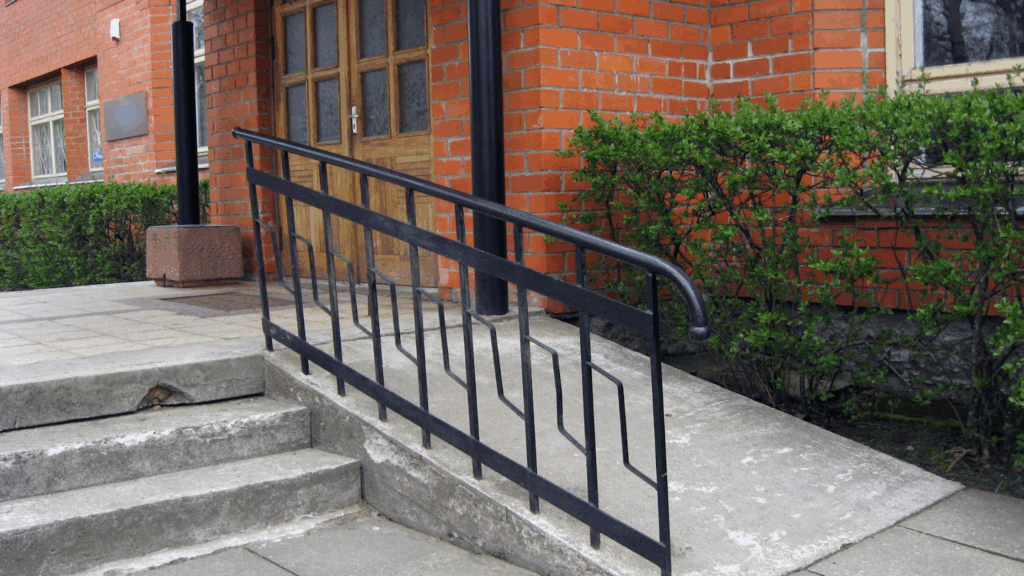
Ahead of the Nigeria National Disability Summit 2025 scheduled to hold in Abuja on October 29 and 30, Nigerians have called on governments and individuals to ensure inclusivity and accessibility of public buildings and spaces for People With Disability (PWDs).
The call gained traction following a video by a Nigerian content creator, Hauwa, on X, which exposed Nigeria’s disability accessibility gaps.
The video, entitled, ‘There should be space for people living with disabilities,’ pointed out the inaccessibility of public spaces like court rooms, places of worship, hospitals, banks, Automated Teller Machines (ATMs), transportation systems, and events for PWDs.
Netizens, who shared their experiences and lent their voice to the call, recalled stories of stigma and challenges in education and employment.
Narrating his experience, @Cycogreat said, “We have been socially conditioned to think people with disabilities are beggars because you don’t get to see them often in social gatherings. Buses, banks, roads, and most worship centres are not optimised to meet the needs of people with disabilities. It’s so sad.
“I can’t count how many times I will be standing on my own, and people will just tell me, take this N50, N200, and N100.. I will ask them what for?”
@Theyinkaa wrote, “The rude shock I got when I went to magistrates’ court at Ogba and there was no ramp in sight in a building of about five floors. Worse, the elevator isn’t working. How do PLWD who have their cases on the top floor court rooms access it?”
In his submission, @tolubinutu called for kindness towards other kinds of disabilities that are not physically seen like autism, ADHD, etc.
He said, “The saddest part if that if Nigeria is this unprepared for people whose disabilities we can see like mobility and hearing issues, imagine how grossly unprepared Nigeria is to help those with disabilities we may not physically see: ADHD, Autism, Dyslexia, Dyscalculia.
“It’s not a lack of money. It’s a lack of love. And that’s the real disability in our leadership.”
@dokitawaa added, “Thank you for bringing up this important and timely topic. Disability inclusion remains one of the most overlooked areas in Nigeria, and it reflects deeply in how our society is structured. From our economy to our educational and social systems, people living with disabilities are often left out, not by choice but by design.
“Many buildings are not disability friendly, as accessibility is rarely considered in architectural planning or urban design. There are very few schools equipped to support children or adults with disabilities and limited government programmes of funding to help them live independently or access employment opportunities.
“Culturally, our families, religious, and traditional systems have also not evolved to fully embrace disability inclusion. Too often, disability is seen through the lens of fate, superstition, or pity rather than a call for empathy, equity, and social responsibility.
“It is time we change this mindset. Inclusion should not be an afterthought; it should be built into every aspect of our society: education, infrastructure, policy, healthcare, and community life.
“I hope that one day, Nigeria will truly wake up to a society where every person, regardless of ability, has equal opportunity to live, learn, and thrive.”
As part of inclusion, others suggested learning sign language, the use of Braille, and ensuring disability-friendly environments.
@ryieBerks said, “This is why I’ll stop at nothing to learn sign language and Braille. It’s totally unfair that we exclude people with disabilities–we learn new languages by choice, although not entirely our fault, we never take it upon ourselves to learn theirs.”
@MsVotie added, “I’ve had customers in wheelchairs come into my store. It then dawned on me that the people who designed that market were really thoughtful because there are ramps everywhere! I started to look for a shop in a plaza/mall, and 90% of the overly priced places I looked at didn’t have ramps or elevators.”